

Quranic Arabic Course for Beginners: Complete Guide
A Quranic Arabic course for beginners teaches you to understand the Quran directly in Arabic—not through translations, but through the actual words Allah revealed. Most beginners reach 50–60% Quran comprehension in 6–12 months with consistent daily practice and a qualified teacher.
This guide covers everything: what Quranic Arabic is, how it compares to Modern Standard Arabic, what you’ll learn at each stage, how to choose the right online course, proven strategies that actually work, and the mistakes that slow most people down.
What Is Quranic Arabic—and Why Does It Change Everything?
Most Muslims recite the Quran beautifully. They’ve memorized surahs. Their Tajweed is correct. And yet—every single ayah is beautiful sounds without meaning.
Here’s the thing: that’s like singing opera in Italian without knowing Italian. The sounds are stunning. But you have no idea what’s actually being said.
Quranic Arabic closes that gap. It’s the classical Arabic language in which the Quran was revealed to the Prophet Muhammad ﷺ in the 7th century. Not “old Arabic.” Not “difficult Arabic.” The purest, most eloquent form of the language—preserved exactly as Allah revealed it, unchanged for 1,400 years.
Why Understanding Quranic Arabic Transforms Your Islam
Direct access to Allah’s words. Translations are interpretations. Every translator makes choices. When you understand Quranic Arabic, you bypass those choices entirely and access what Allah actually said.
Prayer becomes conversation. Imagine knowing every word you recite in Salah. Not just that you’re praising Allah—but exactly how, and why. Prayer stops being ritual. It becomes dialogue.
Deeper spiritual connection. When you hear “إِنَّ مَعَ الْعُسْرِ يُسْرًا” (Inna ma’al usri yusra) and you understand directly—”with hardship comes ease”—that’s not the same as reading an English translation. That’s Allah speaking to you in His own words. The difference is real, and students who’ve experienced it describe it as transformative.
Independent understanding. You stop depending on scholars for basic comprehension. You can open the Quran and read it yourself.
Access to classical scholarship. The great Tafseer works—Ibn Kathir, Al-Tabari, Al-Qurtubi—are in Arabic. Understanding Quranic Arabic eventually opens centuries of Islamic knowledge.
Quranic Arabic vs. Modern Standard Arabic: Which One Do You Need?
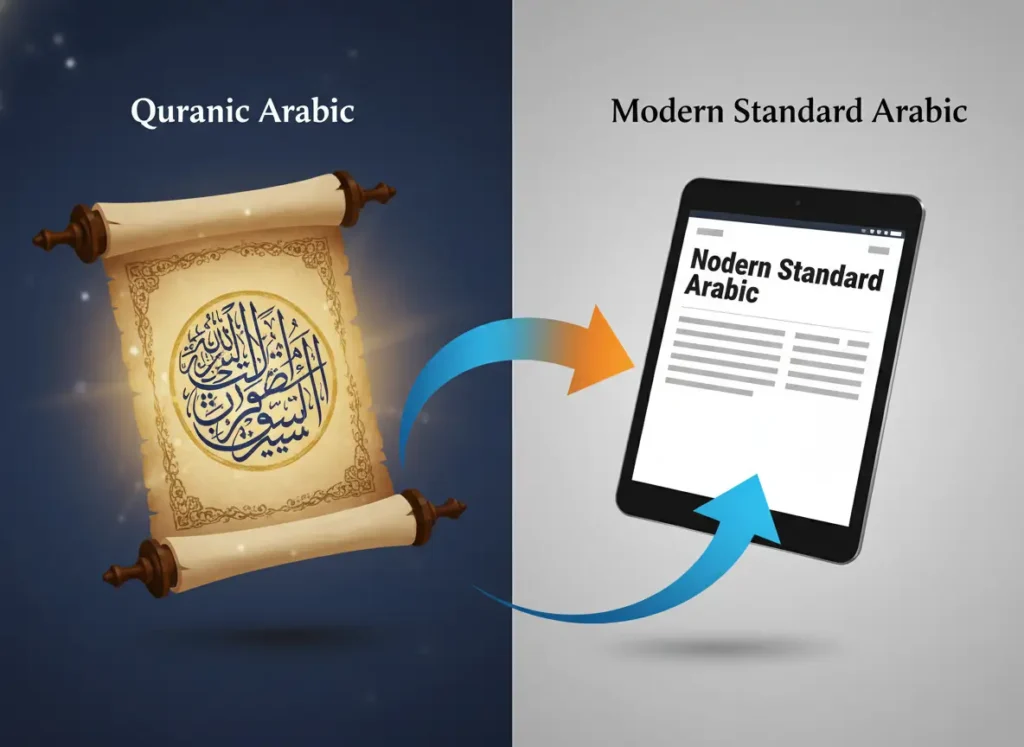
This question comes up constantly. And the honest answer is: it depends on your goal.
What Is Modern Standard Arabic (MSA)?
MSA is the formal Arabic used in news media, official documents, modern literature, and formal speech across Arab countries today. It’s what Al Jazeera broadcasts in. It’s what formal letters are written in. Nobody grows up speaking it as a first language—it’s always learned.
MSA has simpler grammar than classical Arabic and includes modern vocabulary (internet, democracy, airplane). It’s useful if you want to read newspapers, work in Arabic-speaking contexts, or communicate formally.
What Is Quranic Arabic?
Quranic Arabic is classical Arabic—the full, unabbreviated grammatical system, specialized vocabulary, and rhetorical sophistication of the 7th century revelation. It hasn’t been simplified. It hasn’t been modernized. It’s preserved exactly as revealed.
The Key Differences That Matter for Beginners
Grammar complexity: MSA simplified several classical structures. Quranic Arabic uses the full case system (i’rab), more complex verb forms, and grammatical features MSA dropped.
Vocabulary: MSA includes modern words with no Quranic equivalent. Quranic Arabic has words and usage patterns that are Quran-specific—knowing “satellite” in Arabic doesn’t help you read the Quran.
Purpose: MSA for communication and modern contexts. Quranic Arabic for Quran comprehension and classical Islamic scholarship.
Which Should You Start With?
Start with Quranic Arabic if: Your primary goal is understanding the Quran. You want spiritual connection over conversational ability. You’re focused on Islamic knowledge specifically.
Start with MSA if: You want broader Arabic literacy. You need Arabic for work or travel. You plan to read modern Arabic content.
The practical recommendation for most Muslims: Start with Quranic Arabic. It achieves your spiritual goal faster. And since MSA derives from classical Arabic, your Quranic Arabic foundation will accelerate any MSA study you do later.
Who Is This For?

This is for you if:
- You recite Quran but depend on translations to know what you’re saying
- You’ve tried learning Arabic before but never found a structured, Quran-focused path
- You’re a new Muslim wanting direct understanding without years of general Arabic study
- You’re an adult who feels it’s “too late”—it’s not
- You want to understand your Salah, not just perform it
- You’re a parent wanting to understand the Quran before teaching your children
This is NOT for you if:
- You want conversational Arabic for travel or work (MSA or Egyptian Arabic is more relevant)
- You’re not willing to practice 20–30 minutes daily between sessions
- You expect understanding without any consistent effort
What You’ll Actually Learn: The Four Phases
Online Quranic Arabic courses for beginners aren’t abstract language classes. They’re focused, practical programs teaching exactly what you need to understand the Quran—and nothing that wastes your time.
Phase 1 (Months 1–6): Foundation
What you learn:
- Arabic script mastery (28 letters, all forms, vowels, reading)
- Essential vocabulary: 100–300 high-frequency Quranic words
- Basic grammar: noun, verb, particle distinction; basic verb tenses
- Short surah analysis with word-by-word understanding
Milestone: You recognize common Quranic words, understand simple ayaat without translation, and can analyze short surahs (Al-Ikhlas, Al-Falaq, An-Nas) word by word.
Here’s the thing about this phase—it feels slow. You’re building the foundation. Stick with it. Month 6 looks very different from month 1.
Phase 2 (Months 7–12): Building
What you learn:
- Expanded vocabulary: 300–500 words (covers 65–75% of Quranic words by frequency)
- Grammar depth: subject-predicate structures, verb conjugations, pronouns, dual forms
- Sentence analysis skills applied to longer ayaat
- Understanding patterns that repeat throughout the Quran
Milestone: You understand 50–60% of the Quran directly, without translation. You can follow along in Salah and catch meaning in real time.
This is where most students describe their first emotional moments—understanding an ayah they’ve recited for years, for the first time.
Phase 3 (Months 13–18): Intermediate
What you learn:
- Advanced vocabulary: 500–1,000 words (covers approximately 80% of Quran)
- Advanced grammar: full case system (i’rab), conditional sentences, relative clauses
- Morphology: Arabic root system, word patterns (awzaan), word derivation
- Analyzing complex ayaat and multi-sentence passages
Milestone: You understand 70–80% of the Quran directly. You can work through difficult passages with minimal support.
Phase 4 (Months 19–24+): Advanced
What you learn:
- Comprehensive vocabulary: 1,000+ words
- Complete grammar mastery and introduction to rhetoric (Balagha)
- Independent Tafseer study with classical Arabic sources
- Teaching ability
Milestone: Functional Quranic literacy. You open the Quran and read it—understanding directly, not translating.
How to Start Learning Quranic Arabic: Your Practical Roadmap
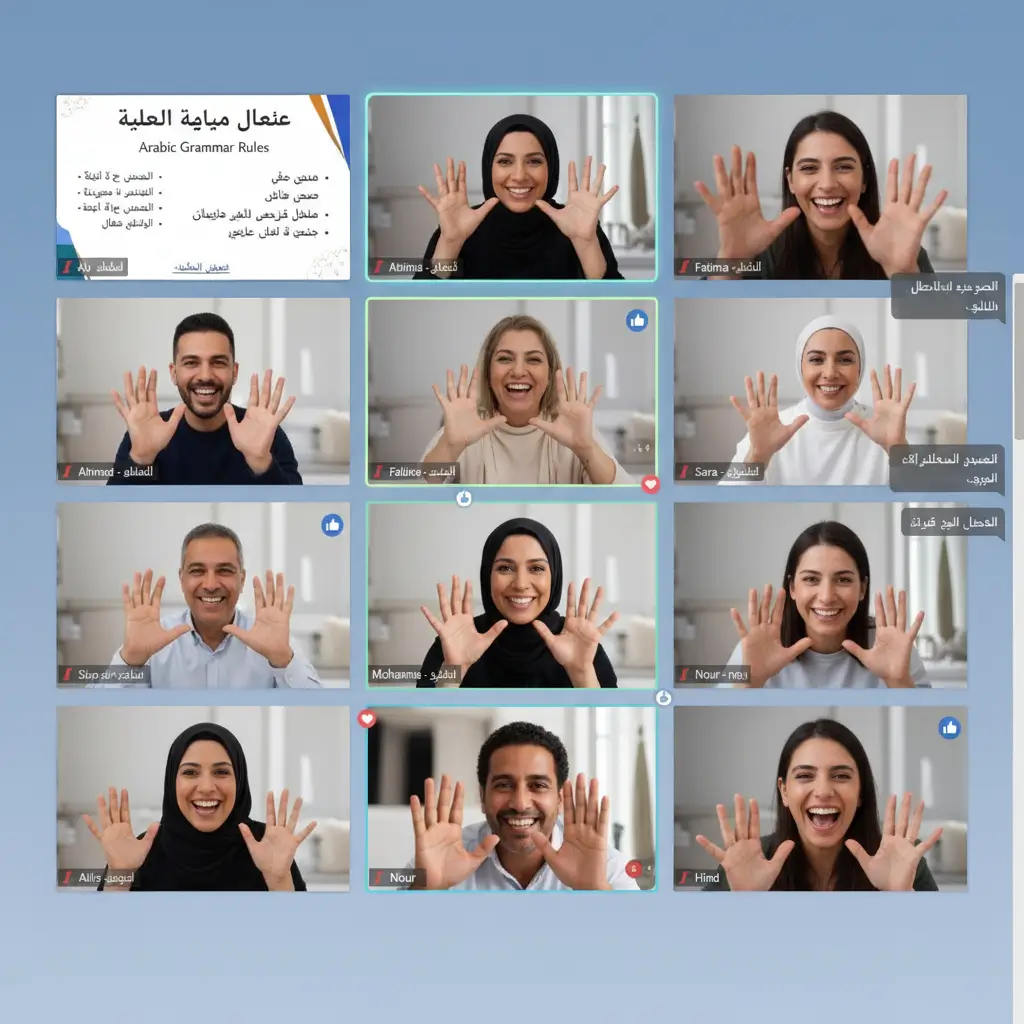
Step 1: Assess Your Current Level Honestly
Before choosing any course, know where you’re starting.
Complete beginner (can’t read Arabic): Start with Arabic script + Quranic Arabic for absolute beginners. Don’t skip this. Reading fluency is the foundation everything else builds on.
Can read Arabic slowly: Start with vocabulary-focused Quranic Arabic + basic grammar. You don’t need more alphabet work—you need speed and meaning.
Read fluently but don’t understand: Start with intensive Quranic vocabulary + intermediate grammar. This is probably the most common starting point for adult Muslims.
Already understand some Arabic: Start with advanced grammar + morphology + guided independent study.
Not sure where you fall? Take the free Arabic placement test and get an honest, personalized assessment before committing to any program.
Step 2: Choose Your Learning Format
One-on-one online classes: Best for most serious students. 100% teacher focus, pace adapts to you, mistakes corrected in real time. Typical cost: $20–35/session.
Small group online (3–5 students): Good if you’re budget-conscious and the teacher still gives individual correction time. Typical cost: $10–20/session.
Self-paced courses: Possible for highly disciplined learners, but without a teacher catching errors, bad habits become permanent. Works best as a supplement, not a primary method.
The honest recommendation: one-on-one or small group with a qualified teacher. Self-study can supplement, but it can’t replace live correction and feedback.
Step 3: Commit to a Realistic Schedule
Minimum effective effort (for real progress):
- 30 minutes daily, 5 days per week
- 1–2 live teacher sessions per week
- Timeline to functional understanding: 18–24 months
Optimal effort (faster progress):
- 60 minutes daily, 6 days per week
- 2–3 live teacher sessions per week
- Timeline: 12–18 months
Reality check: Consistency beats intensity every time. 30 minutes daily for 18 months produces more than 3-hour sessions on weekends with nothing in between. Daily is the key word.
Step 4: Build Your Resource Stack
Must-have tools:
- Structured Quranic Arabic course (your primary learning vehicle)
- Word-by-word Quran translation (print or app—for daily practice)
- Flashcard app (Anki is free and excellent for vocabulary)
- Grammar reference you can actually understand
Helpful supplements:
- Audio of expert reciters for pattern recognition
- Vocabulary frequency lists (top 500 Quranic words)
Step 5: Set Your Monthly Milestones
Month 1: 100 words learned, basic grammar concepts clear Month 3: 300 words, can analyze simple ayaat Month 6: 500 words, understanding 50% of short surahs Month 12: 800 words, understanding 70% of Quran Month 18: 1,200+ words, functional Quranic literacy
Write these down. Review monthly. Adjust if needed. Goals without tracking are just wishes.
Proven Strategies That Actually Work

Generic language advice often fails for Quranic Arabic. These strategies work specifically for Quran comprehension.
Strategy 1: Vocabulary by Frequency, Not Alphabet
This is the single biggest accelerator most beginners miss.
Learning words alphabetically means a rare word gets equal time as a word that appears 1,000 times in the Quran. That’s backwards.
The data:
- Top 100 Quranic words = 50% of all Quranic text
- Top 300 words = 65% of Quran
- Top 500 words = 75% of Quran
- Top 1,000 words = 85% of Quran
Your strategy: master the top 100 words first. Then work through the next 200. Then 500. This produces the fastest comprehension gains possible.
Strategy 2: Learn Grammar Through Quran, Not Textbooks
Abstract grammar rules are forgettable. Quranic examples make rules stick.
Instead of: “The subject (mubtada) is in the nominative case.”
Learn through: “اللَّهُ نُورُ السَّمَاوَاتِ وَالْأَرْضِ — Allah (اللَّهُ) is the mubtada in the nominative, noor (نُورُ) is the khabar.”
Every grammar concept should connect immediately to an ayah you analyze. Not a made-up example—a real ayah from the Quran.
Strategy 3: Spaced Repetition for Vocabulary That Stays
You’ve experienced this: you learn a word, feel confident, then forget it two weeks later. That’s normal without a system.
Spaced repetition software (Anki is free) solves this. It shows you words right before you’d forget them. New word → review day 2 → day 4 → day 8 → day 16. The interval grows as your memory strengthens.
Add every new Quranic word to Anki. Review daily (15–20 minutes maximum). In 6 months, you’ll have permanent vocabulary that doesn’t fade.
Strategy 4: Word-by-Word Surah Analysis
Take one short surah—Al-Ikhlas, Al-Falaq, An-Nas are perfect starting points. Analyze every single word:
- Root letters
- Pattern and grammatical form
- Role in the sentence
- Meaning in context
- Other places this word or root appears in the Quran
This takes 30–60 minutes per surah. But the understanding you build transfers to every ayah using those same words and patterns.
Aim for one surah per week. In six months, you’ve deeply analyzed 24+ surahs. That’s a different relationship with the Quran than you’ve ever had.
Strategy 5: Record and Review Your Analysis
After working through an ayah, record a voice memo explaining what you understood. Listen back. Can you explain each word’s role? If not, that’s exactly what to bring to your teacher next session.
This self-checking habit reveals gaps faster than any test.
Strategy 6: Never Skip the Teacher
Self-study creates errors you can’t see. A grammar misunderstanding practiced for weeks becomes a deeply embedded mistake. A teacher catches it in 30 seconds.
Minimum: 1–2 live sessions per week. Not for information delivery—for feedback, correction, and the kind of direct transmission that’s been the foundation of Islamic scholarship for 1,400 years.
Let me tell you about Fatima.She was 58 years old. A grandmother. She’d recited the Quran her whole life — beautifully, with correct Tajweed. But she never understood a word of it. Not one.For decades, she told herself: “I’m too old to learn Arabic now. I should have started as a child.”Then her grandson started learning Quranic Arabic online. She watched his lessons. She saw the light in his eyes when he understood an ayah for the first time.She thought: “Why not me?”She enrolled in our beginner course. Her teacher, Ustadha Aisha, started with the top 100 words. Not grammar. Not theory. Words. “رَبّ” (Lord). “رَحْمَة” (mercy). “هُدًى” (guidance). Words she’d recited thousands of times — now she finally knew what they meant.Week four, she was reading Surah Al-Fatiha and understanding half of it. She cried.“All these years,” she said, “I was saying ‘Ihdina al-sirat al-mustaqeem’ — and I didn’t even know I was asking for guidance.”Eight months later, Fatima understands 60% of the Quran. She leads the Quran circle at her mosque now. She teaches other women.She told me recently: “I used to think I’d missed my chance. Now I know — Allah’s guidance doesn’t expire.”You haven’t missed your chance either. Start where you are. Today.
Common Mistakes That Slow Beginners Down
Mistake 1: Trying to understand everything immediately
You will not understand every word in the first month. Or the third. That’s completely normal. Students who push through the discomfort of partial understanding progress. Students who stop every unknown word and spiral into frustration don’t.
Trust the process. Comprehension builds gradually—then accelerates suddenly.
Mistake 2: Studying grammar in isolation
Grammar rules memorized without Quranic examples evaporate within days. Every single rule needs an ayah to anchor it. “Here’s the rule. Here’s where Allah used it in Surah Al-Baqarah.” That’s how grammar sticks.
Mistake 3: Skipping vocabulary review between sessions
You can’t retain new vocabulary without repeated exposure. If you’re only seeing words during class, you’re spending 80% of each session re-learning rather than progressing. Twenty minutes of daily Anki review between sessions completely changes your trajectory.
Mistake 4: Choosing a course based on price alone
The cheapest option almost always means undertrained teaching. And here’s the real cost: correcting a grammatical misunderstanding that’s been practiced for six months takes far longer than learning it correctly from day one. Invest in a qualified teacher from the start.
Mistake 5: No clear goal or timeline
“I want to understand the Quran” is not a goal. “I will understand 60% of the Quran directly within 12 months, studying 30 minutes daily” is a goal. Vague intentions produce vague results. Set a specific target, review monthly, and adjust.
Online Quranic Arabic Courses for Adults: You’re Not Too Late
Honestly, the biggest obstacle isn’t age. It’s the belief that age is an obstacle.
Adults bring enormous advantages to Quranic Arabic. Stronger motivation. Better discipline. The intellectual ability to understand why grammar rules work—not just memorize them. Life experience that makes Quranic themes resonate more deeply than they would for a 12-year-old.
Yes, you might acquire new sounds slightly more slowly than a child. But you’ll understand grammar structure faster. You’ll apply vocabulary more systematically. And your motivation is real—you actually want this, rather than being sent by parents.
Many students who started in their 40s, 50s, and 60s describe their Quranic Arabic progress as one of the most meaningful things they’ve done.
What Works Specifically for Adults
Schedule around your actual life. Early morning before work (30 focused minutes) beats theoretical 2-hour weekend sessions you’ll cancel. Find the time slot that actually happens, every day.
Leverage your existing Arabic if you have any. If you can read Arabic for Salah, you’re ahead. Your teacher can fast-track you past the script stage.
Connect new vocabulary to ayaat you know. When you learn the word “رَحْمَة” (rahma, mercy), immediately connect it to every ayah you’ve recited that contains it. You already know the sounds—now you’re adding meaning. That’s far easier than learning from scratch.
Be explicit about your goals with your teacher. Don’t assume they know you want to understand prayer specifically, or that Surah Al-Mulk is your priority surah. Tell them. Good teachers adapt completely to your goals.
For broader Arabic skills alongside Quranic study, explore our Arabic for Adults program.
How to Choose the Right Quranic Arabic Course Online
Not all programs deliver what they promise. Here’s what actually matters.
Teacher Qualifications (Non-Negotiable)
✅ Formal training in classical Arabic (Al-Azhar or equivalent) ✅ Ijazah or recognized credentials in Quranic sciences ✅ Native Arabic speaker with classical pronunciation ✅ Teaching experience specifically in Quranic Arabic for non-native speakers ✅ Can explain grammar in English (or your language) clearly
Red flag: teachers who only speak Arabic in lessons, can’t explain why rules work, or have vague credentials.
Curriculum Structure
Quality programs have a systematic, documented progression—not “we’ll cover whatever you ask.” Look for:
- Clear vocabulary goals per month
- Grammar units taught in logical sequence
- Regular assessments to verify retention
- Specific connection to Quranic ayaat throughout
Class Format
One-on-one sessions produce the fastest results for most students. Your teacher hears every error, adjusts pacing for you, and answers your specific questions. Small groups (3–5) can work well if the teacher still gives individual feedback time.
Realistic Pricing in 2026
One-on-one sessions: $20–35 per session (45–60 minutes) Small group: $10–20 per session Monthly packages often discounted for 8–12 sessions
Very cheap (<$10/session) almost always indicates undertrained teachers. See our course pricing page for transparent, package-based options.
The Trial Class Rule
Never commit to a course without a trial lesson. One session reveals the teacher’s methodology, language clarity, patience, and whether their style works for you. A good academy always offers a trial.
Grammar: The Foundation of Quranic Arabic
Understanding the Quran goes far beyond reading Arabic letters correctly. For many learners, the real turning point comes when grammar starts to make sense. Quranic Arabic grammar is not about memorizing complex rules—it’s about learning how the language works, how meanings are built, and how divine messages are structured with precision and depth.
Fundamental Noun Patterns
Nouns in Quranic Arabic follow specific patterns that help readers understand meaning and function. Key concepts beginners should learn include:
- Singular, dual, and plural noun forms
- Masculine and feminine structures
- Definite and indefinite nouns
- How nouns change based on their role in a sentence
These patterns appear repeatedly in the Quran, making recognition easier with practice.
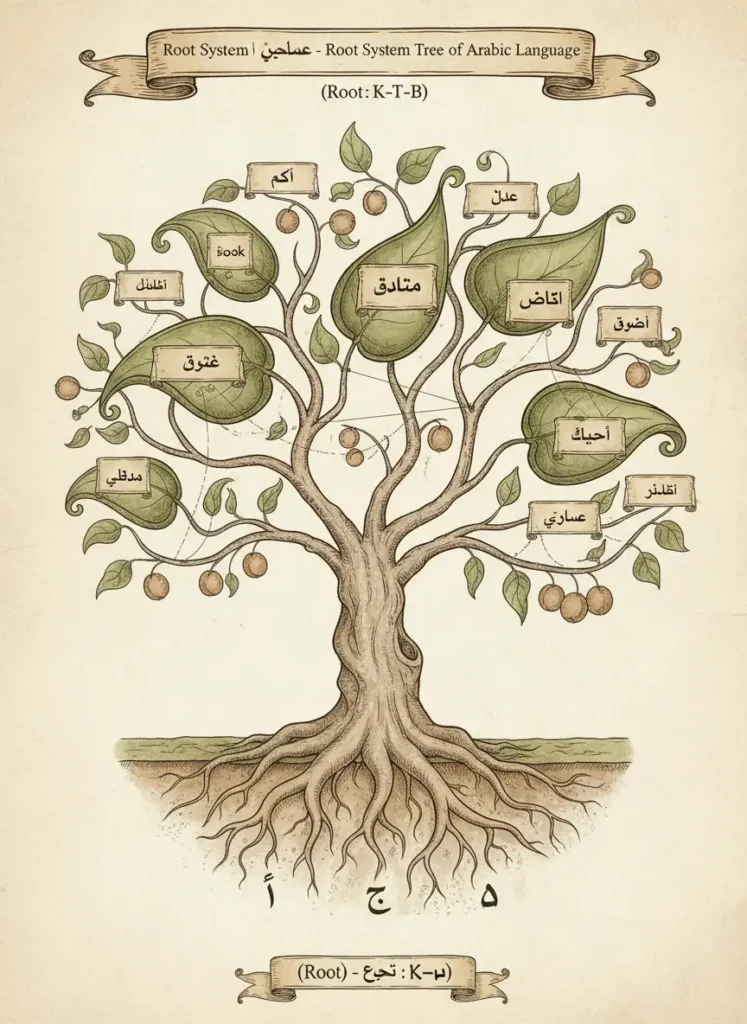
Root Words and Derivations
Arabic is a root-based language. Most Quranic words come from three-letter roots. Learning roots helps students:
- Recognize vocabulary faster
- Connect multiple meanings from one root
- Understand deeper linguistic relationships
- Improve translation accuracy
For example, one root can generate verbs, nouns, and adjectives with related meanings, revealing the richness of Quranic language.
Essential Sentence Structures
Sentence structure is the backbone of Quranic grammar understanding. Quranic Arabic sentences often follow verb–subject–object order or subject–predicate structures. Beginners learn:
- How verbs agree with subjects in gender and number
- Why verb forms sometimes appear singular before plural subjects
- How sentence emphasis changes meaning
As learners progress, they also encounter descriptive phrases, possessive constructions, and embedded clauses. Understanding how phrases connect allows students to follow longer verses without confusion.
Verbs in Quranic Context
Verbs carry action, time, and meaning in Quranic Arabic. Quranic verbs follow systematic patterns that show who is performing the action, whether it is past, present, or a command, and the intensity or repetition of the action. Once learners understand verb patterns, reading becomes smoother and more intuitive.
The Quran uses tense creatively:
- Past tense for certainty
- Present tense for continuity
- Commands for divine instruction
Grammar helps readers understand why certain tenses are chosen and how they affect meaning.
Adjectives, Pronouns, and Particles
Adjectives in Quranic Arabic follow the noun, match gender, number, and case, and enhance meaning without redundancy. Recognizing them helps readers grasp descriptive depth in verses.
Pronouns appear frequently—as independent pronouns, attached pronouns, or hidden pronouns within verbs. Understanding pronouns helps learners track references across verses and avoid confusion in long passages.
Prepositions and particles are small words that carry big meaning. They affect meaning direction, the relationship between words, and contextual interpretation. A single particle can emphasize certainty, negate a statement, or introduce a condition—grammar reveals how one small word can change the entire meaning of an ayah.
Advanced Grammar Applications
As learners advance, grammar unlocks deeper layers including:
- Idiomatic expressions that cannot be translated word-for-word
- Sarf (morphology) and nahw (syntax) analysis
- Quranic text translation and deep vocabulary studies
- Introduction to rhetoric (Balagha)
The Quran preserved classical Arabic, unified diverse dialects, and set linguistic standards for 1,400 years. Understanding its grammar means understanding the highest standard of the Arabic language.
Daily Grammar Practice That Works
Effective grammar practice techniques include:
- Grammar videos paired with short daily lessons
- Quran reading with grammatical notes
- Online structured classes with expert correction
- Daily drills to recognize patterns instantly
Short, focused daily practice builds fluency faster than occasional long sessions.
Building Quranic Vocabulary: What Actually Works
Vocabulary is the gateway to Quran comprehension. You can know all the grammar rules in the world, but without words, you understand nothing. Here’s how to build vocabulary the right way—efficiently, memorably, and in a way that actually sticks.
Start with Root Words
Most Arabic words trace back to three-letter roots. When you learn the root, you unlock many related meanings at once. This approach:
- Helps you see patterns across the Quranic language
- Strengthens comprehension fast because you decode whole families of words
- Makes your reading smoother as your brain starts predicting meanings naturally
For example, the root ك-ت-ب (k-t-b) generates words related to writing—verb, noun, and adjective forms all flow from it, revealing the underlying logic of Arabic.
Master the Alphabet First
To understand Quranic vocabulary, mastering the alphabet is non-negotiable. This means:
- Learning each letter in its isolated, initial, medial, and final form
- Practicing how letters connect—Quranic Arabic is all about flow
- Focusing on sounds that don’t exist in English, like ع، غ، ق
Without this foundation, everything else is guesswork.
Memorize by Frequency, Not Alphabet
This is the single biggest accelerator most beginners miss. Learning words alphabetically means a rare word gets equal time as a word that appears 1,000 times in the Quran. That’s backwards.
The data:
- Top 100 Quranic words = 50% of all Quranic text
- Top 300 words = 65% of Quran
- Top 500 words = 75% of Quran
- Top 1,000 words = 85% of Quran
Your strategy: master the top 100 words first. Then work through the next 200. Then 500. Words that repeat hundreds of times—رب، يوم، حق، علم، قوم، نفس، نور—should be your first targets. Group words by theme: guidance, creation, faith, morals. Build vocabulary around core Islamic meanings to deepen understanding.
Learn Words in Context
A word’s meaning becomes clearer when studied inside a full verse. When analyzing vocabulary contextually:
- Look at its relationship with the words before and after it
- Note if the tone is a command, a reminder, or a story
- Identify why this specific word was chosen over similar ones
Many Quranic words also carry meanings tied to pre-Islamic Arabia. Knowing historical context reveals deeper layers, makes tafsir readings more meaningful, and helps you appreciate the beauty and precision of the divine language.
Spaced Repetition: The System That Actually Works
You’ve experienced this: you learn a word, feel confident, then forget it two weeks later. That’s normal without a system.
Spaced repetition software (Anki is free) solves this. It shows you words right before you’d forget them. The interval grows as your memory strengthens:
- New word → review day 2 → day 4 → day 8 → day 16
- Add every new Quranic word to Anki and review daily (15–20 minutes maximum)
In 6 months, you’ll have permanent vocabulary that doesn’t fade.
Word-by-Word Surah Analysis
Take one short surah—Al-Ikhlas, Al-Falaq, An-Nas are perfect starting points. Analyze every single word:
- Root letters
- Pattern and grammatical form
- Role in the sentence
- Meaning in context
- Other places this word or root appears in the Quran
This takes 30–60 minutes per surah. But the understanding you build transfers to every ayah using those same words and patterns. Aim for one surah per week. In six months, you’ve deeply analyzed 24+ surahs.
Practical Daily Vocabulary Habits
Apply words in daily recitations—recite and understand at the same time. Pick a surah and practice reading with meaning. Highlight unfamiliar words and add them to your practice list. Repeat the same verse across multiple days until it sticks.
Track progress with flashcards: use digital cards for spaced repetition, add 5–10 new words daily, and test yourself at the end of each week.
Connect vocabulary to Prophetic stories. When you tie a word to a narrative, the meaning becomes unforgettable—your brain builds emotional links which improve recall dramatically.
Overcoming Common Vocabulary Challenges
Pronunciation precision matters—don’t rush. Listen to native reciters, practice challenging letters like ض، ظ، ص, and record yourself to compare against experts.
Once you master words, move to sentences. Learn how nouns, verbs, and particles interact. Study basic grammar (nahw and sarf). Read short passages daily to build comprehension naturally.
Quranic Arabic vs Modern Standard Arabic: Which Do You Need?
This question comes up constantly. And the honest answer is: it depends on your goal.
What Is Modern Standard Arabic (MSA)?
MSA is the formal Arabic used in news media, official documents, modern literature, and formal speech across Arab countries today. It’s what Al Jazeera broadcasts in. It’s what formal letters are written in. Nobody grows up speaking it as a first language—it’s always learned.
MSA has simpler grammar than classical Arabic and includes modern vocabulary (internet, democracy, airplane). It’s useful if you want to read newspapers, work in Arabic-speaking contexts, or communicate formally.
What Is Quranic Arabic?
Quranic Arabic is classical Arabic—the full, unabbreviated grammatical system, specialized vocabulary, and rhetorical sophistication of the 7th century revelation. It hasn’t been simplified. It hasn’t been modernized. It’s preserved exactly as revealed.
The Key Differences That Matter for Beginners
Grammar complexity: MSA simplified several classical structures. Quranic Arabic uses the full case system (i’rab), more complex verb forms, and grammatical features MSA dropped.
Vocabulary: MSA includes modern words with no Quranic equivalent. Quranic Arabic has words and usage patterns that are Quran-specific—knowing “satellite” in Arabic doesn’t help you read the Quran.
Purpose: MSA for communication and modern contexts. Quranic Arabic for Quran comprehension and classical Islamic scholarship.
Which Should You Start With?
Start with Quranic Arabic if: Your primary goal is understanding the Quran. You want spiritual connection over conversational ability. You’re focused on Islamic knowledge specifically.
Start with MSA if: You want broader Arabic literacy. You need Arabic for work or travel. You plan to read modern Arabic content.
The practical recommendation for most Muslims: Start with Quranic Arabic. It achieves your spiritual goal faster. And since MSA derives from classical Arabic, your Quranic Arabic foundation will accelerate any MSA study you do later.
Frequently Asked Questions
How long does it take to understand Quranic Arabic?
Basic comprehension (50–60% of Quran): 6–12 months with daily practice. Functional understanding (70–80%): 12–18 months. Advanced mastery with nuance: 24–36 months. Speed depends primarily on how much you practice daily—not just how many sessions you attend.
Do I need to learn Modern Standard Arabic first?
No. If your goal is Quran understanding, start directly with Quranic Arabic. MSA can come later if needed. Quranic Arabic is more targeted and reaches your spiritual goal faster. The two overlap significantly, and your Quranic foundation will support any MSA study you do later.
I’m 50 (or 60, or 70). Am I too old to learn Quranic Arabic?
No. Many successful students started in their 50s and 60s. Adults have motivation, discipline, and intellectual tools that children don’t. Progress might be somewhat slower on pronunciation, but understanding grammar and vocabulary is actually easier for adults than for children. Age is not your obstacle.
Can I learn Quranic Arabic without a teacher?
Partially, yes. You can learn vocabulary and basic concepts through apps and self-study. But grammatical misunderstandings go uncorrected, become habitual, and require double the effort to fix later. At minimum, have a qualified teacher review your work monthly. Weekly is better.
What’s the difference between a Quranic Arabic course and a general Arabic course?
Quranic Arabic courses focus specifically on classical grammar, Quranic vocabulary (prioritized by Quran frequency), and ayah analysis. General Arabic courses teach modern conversation, current vocabulary, and communication skills. For Quran comprehension specifically, Quranic Arabic courses are faster and more targeted.
What do I need technically to start?
Reliable internet, a laptop or tablet (not phone—too small for sharing Quranic text during class), headphones with a microphone, and a quiet space. That’s everything.
Why Alphabet Arabic Academy for Your Quranic Arabic Course
We’re based in Cairo. Our teachers are graduates of Al-Azhar University and Egypt’s top classical Arabic programs. We have 5,000+ students from 80 countries and a 4.9/5 rating on Trustpilot.
But here’s what actually matters for your Quranic Arabic learning:
Quran-centered curriculum from lesson one. Every grammar rule you learn connects immediately to an actual Quranic ayah. No abstract textbook exercises divorced from the text you’re trying to understand.
High-frequency vocabulary system. We teach the 1,000 most common Quranic words in frequency order—not alphabetically. This produces the fastest comprehension gains, because you’re always learning what will benefit you most in the Quran you’re already reading.
Al-Azhar trained teachers. Not just native Arabic speakers—classical Arabic specialists with deep training in Quranic sciences. Your teacher understands the text you’re studying at a scholarly level.
True one-on-one instruction. No group classes competing for the teacher’s attention. Your session is yours entirely. Every mistake gets caught. Every question gets answered.
Flexible global scheduling. Classes available 7 days a week across all time zones. Morning, evening, weekends—whenever your life actually allows it.
Transparent, affordable pricing. One-on-one Quranic Arabic classes from $40/month. Monthly packages available. Free trial lesson—no commitment required.
Explore our Quranic Arabic course options and find the right program for your level and goals.
Your Next Steps: Start Today
Every Muslim who understands the Quran directly in Arabic today started at the beginning. Uncertain. Wondering if they could do it. Probably feeling like they’d waited too long.
They started anyway.
Here’s your practical path:
Step 1: Write down your goal. Not “I want to understand Arabic.” Something like: “I will understand 60% of the Quran directly within 12 months.”
Step 2: Know your starting level. Take the free Arabic placement test if you’re unsure.
Step 3: Book a free trial class. Experience the teaching style before committing to anything.
Step 4: Set your daily practice time. 20–30 minutes, same time every day. Non-negotiable.
Step 5: Start today. Not after Ramadan. Not next month. Today.
Conclusion
For 1,400 years, Muslims have recited the Quran in Arabic. How many have truly understood what they were reciting?
The difference between reciting sounds and understanding meaning is the difference between distant observer and direct participant. Between reading letters and hearing your Creator speak to you in His own words.
That transformation is available to you—at any age, from any starting point, from anywhere in the world.
👉 Book your free Quranic Arabic trial class with Alphabet Arabic Academy and begin understanding Allah’s words directly.
إِنَّا أَنزَلْنَاهُ قُرْآنًا عَرَبِيًّا لَّعَلَّكُمْ تَعْقِلُونَ
“Indeed, We have sent it down as an Arabic Quran that you might understand.” [12:2]
Allah made the Quran in Arabic so you would understand it.
It’s time to actually understand it.
بسم الله.